Fashion Female Drawing Under a Blanket
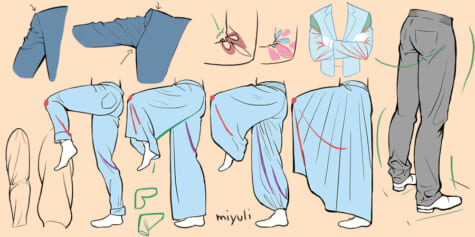
Material and folds tin can have all sorts of forms depending on the softness of the material and the shape of the body. This illustrated tutorial by comic artist miyuli covers basic concepts and approaches for cartoon fabrics of all kinds.
Folds depend on the form they fall on. They are not universal. There are many dissimilar types and factors that influence them.
In that location is no single rule on how to draw folds—The best mode to understand drapery is to practise as many studies of folds as yous tin. The more realistic you desire to describe and paint folds, the more references you will need. Agreement some mutual principles will get in possible to describe them convincingly in a more stylized way.
I've collected some pointers and commonalities hither that I've come across and then far.
Materials
Information technology is very important to consider the materials that y'all describe when dealing with folds. They all have their very ain characteristics that help to decide where to put the appropriate folds. Their texture dictates how diffused the shadows are.
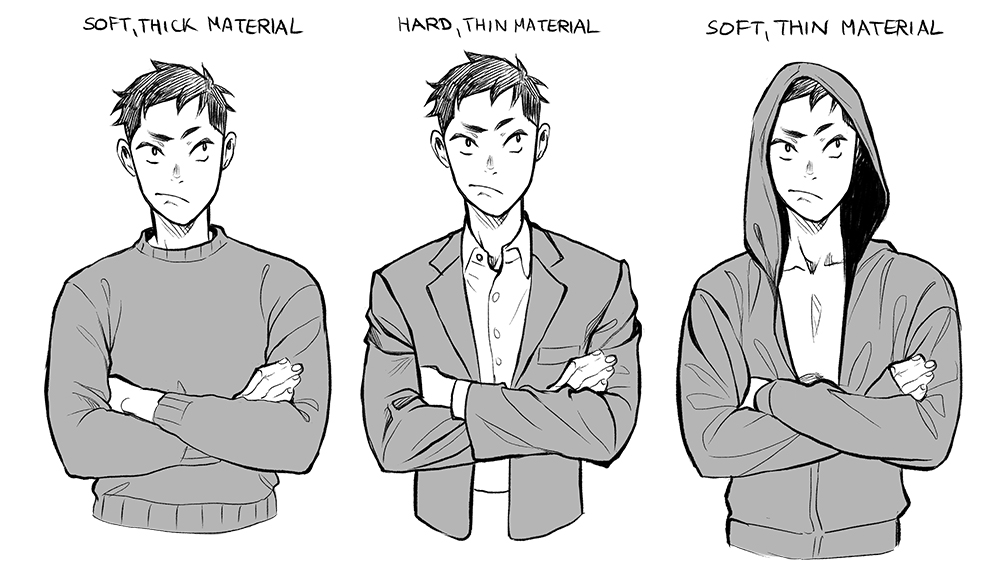
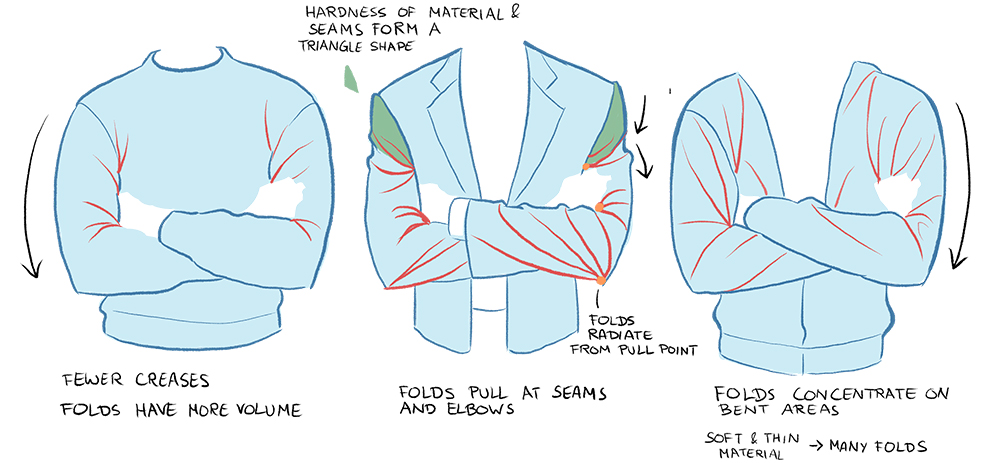
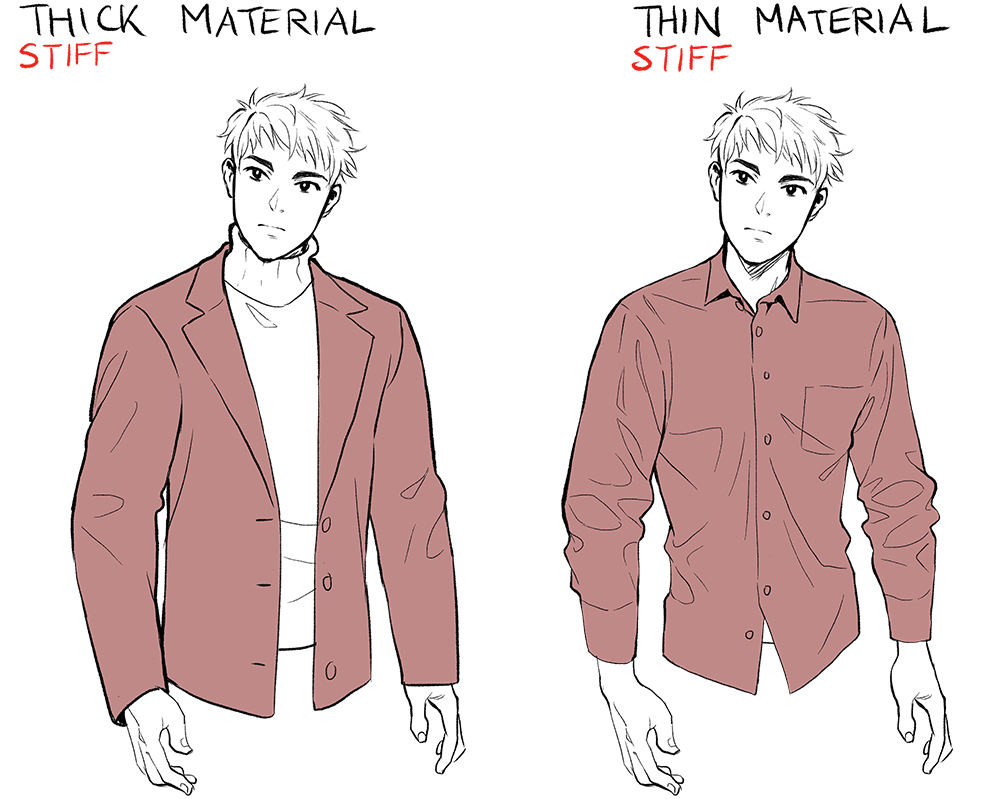
Thicker fabric has wider folds that are usually less visible.
Difficult materials are commonly pulled more at the bending surface area or at the seams.
Soft and sparse material produces the nearly folds, especially effectually the angle areas.
The amount of folds as well depends on how heavy the fabric is and what kind of fabric it is made of. When cartoon fabric it is a skillful thought to consider how thick/thin, hard/soft, heavy/light and smoothen/textured the material is starting time.
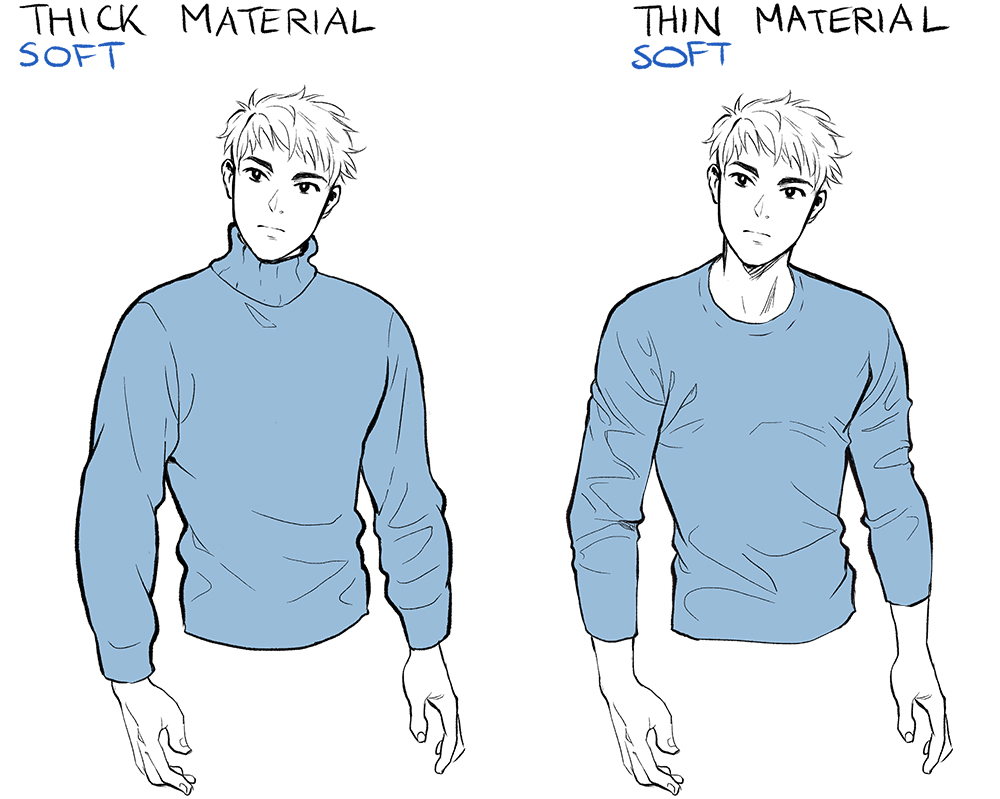
Heavy cloth causes folds of a different book and different width. Information technology is as well more idle and shows fewer folds fifty-fifty when moving.
All wearing apparel have their own arrangement of parts, which heavily influences the formation of folds.
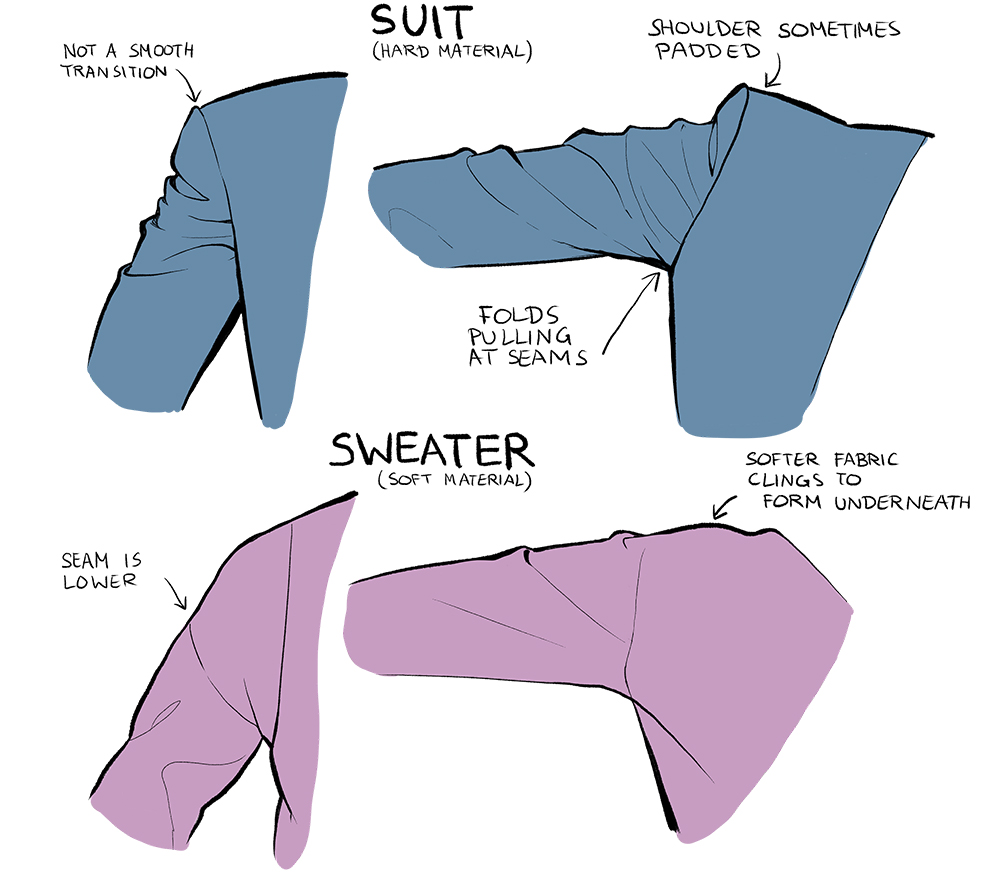
It's good to familiarise yourself with common placements of seams. Y'all don't need to draw them all, only it is ameliorate to have a good key knowledge of the construction.
Folds tend to pull at prominent seams, especially on apparel like suits where the transition between seams is quite noticeable at the shoulder.
Sweaters commonly have their arm seams much lower and the folds don't pull at them as much.
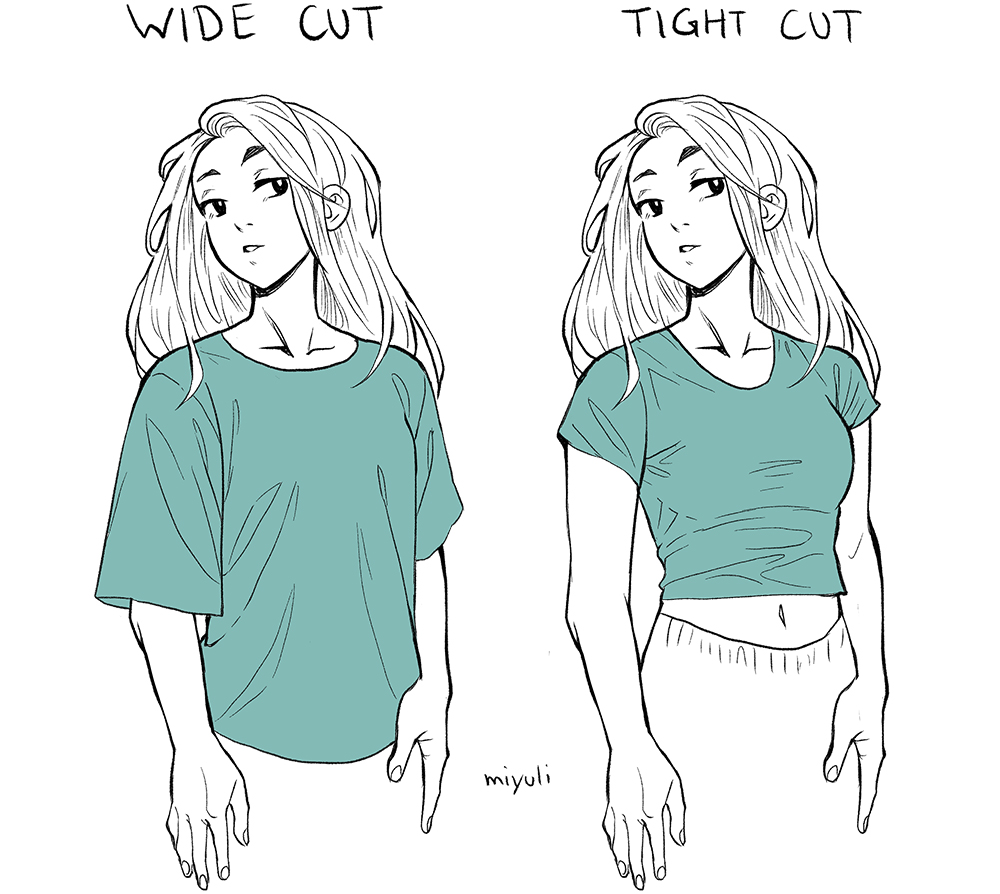
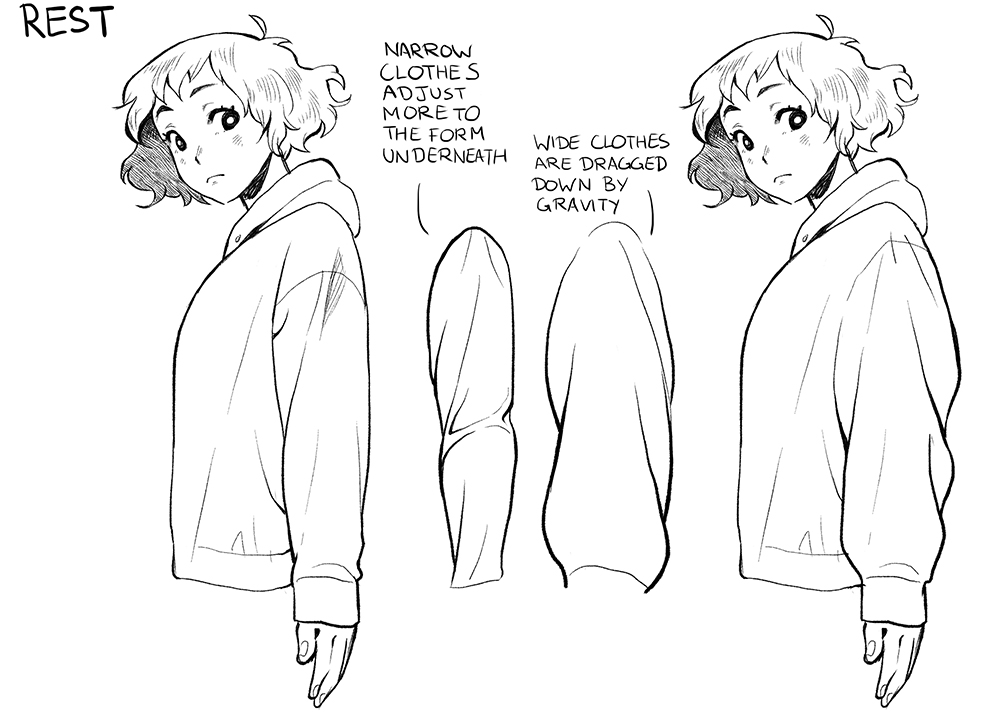
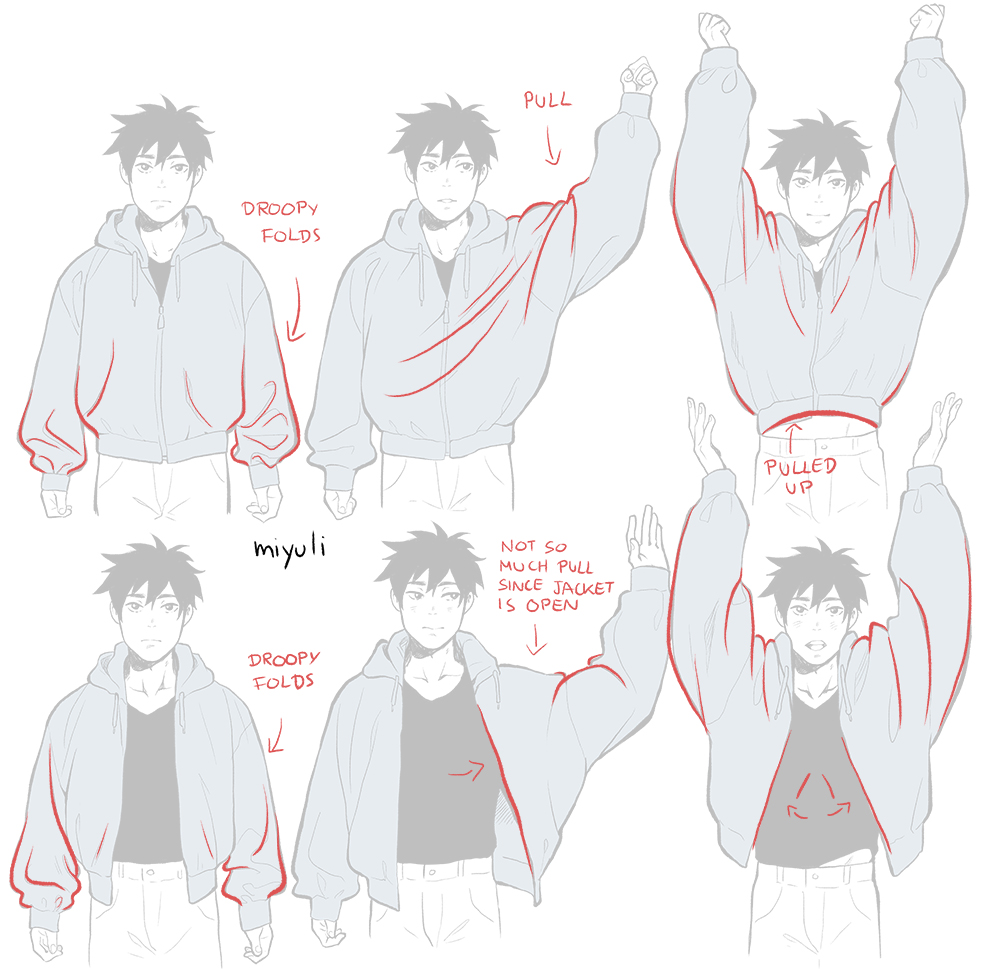
Clothes with a wide cut show different folds than clothes with a narrow cut. A tight cut follows the form of the trunk and wraps around it. Wide clothes prove a lot of droopy folds that go from the pulling betoken towards the ground.
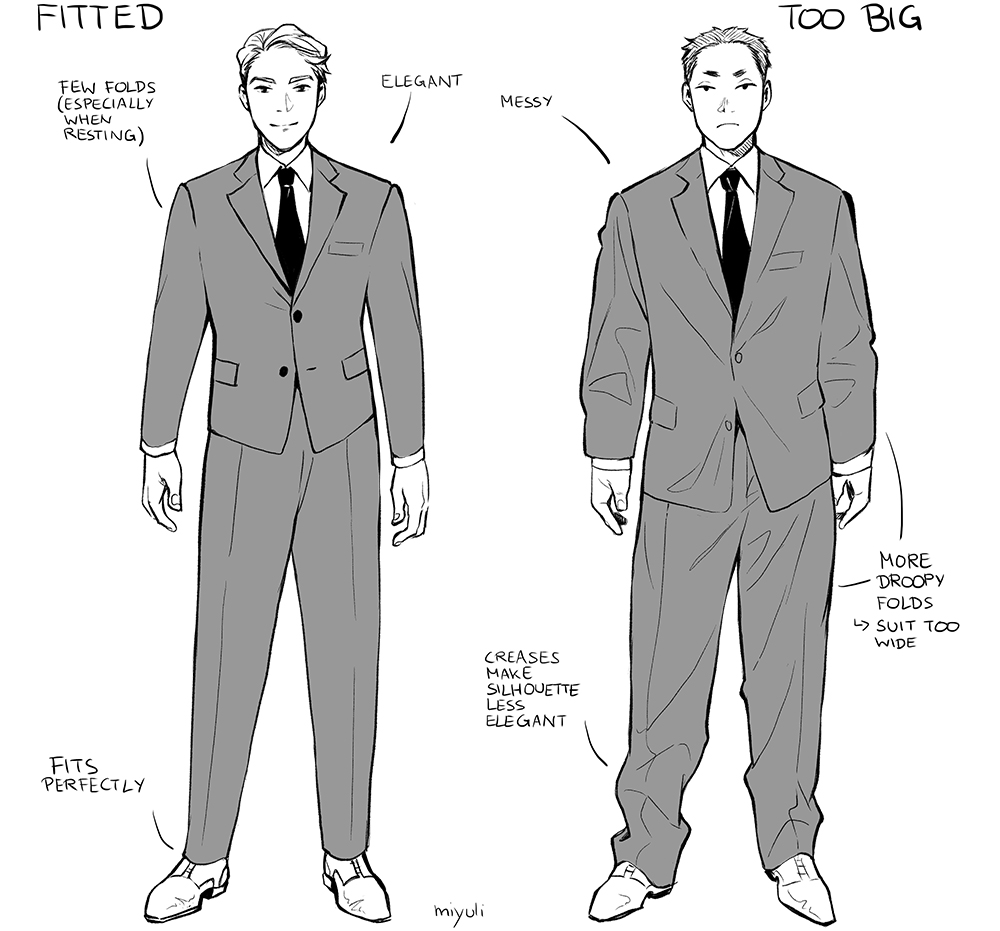
Clothes are often designed with folds or lack thereof in mind.
Fitted material is designed to look elegant with as few folds as possible. When clothes are too tight or likewise loose there are more folds that give a less elegant appearance of the clothing, especially when looking at the silhouette.
Worn-out material tends to pucker more than new or well-maintained fabrics.
Annotation: When drawing clothes and folds, it tin aid to consider what cloth fits the character's personality offset.
External influences
Folds tin can exist heavily afflicted by wind or water.
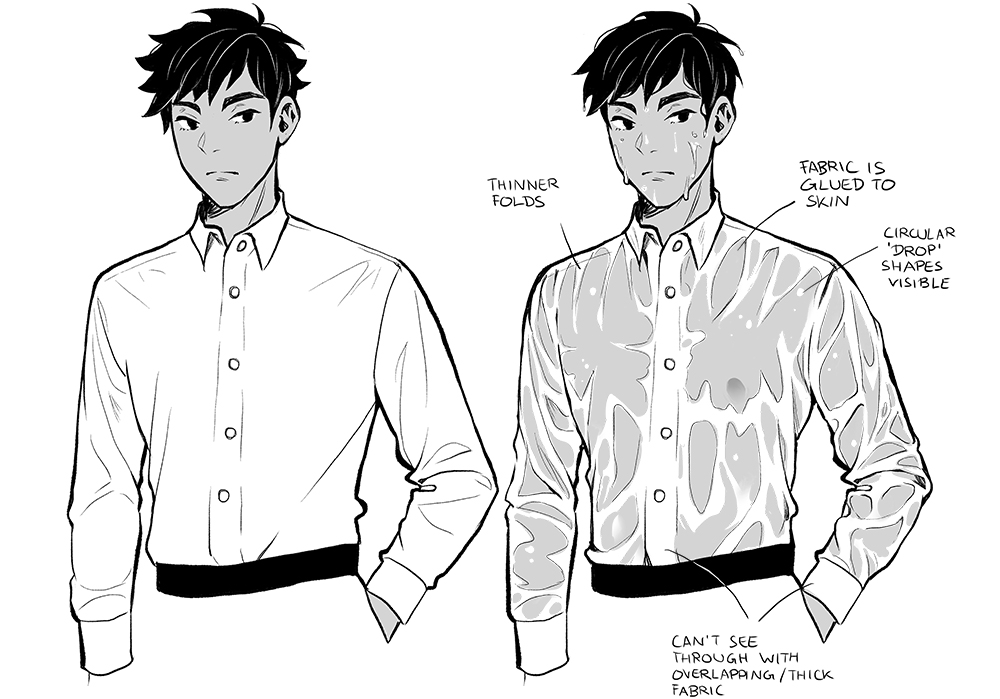
Wet cloth acts differently from dry cloth. It tends to stick more to the form underneath. The water makes the light material a lot heavier, so information technology does non move as easily anymore. Thin cloth becomes see-through.
Movement
When the body is resting the textile is usually dragged downward by gravity. More prominent droopy folds appear the wider and lighter the textile is.
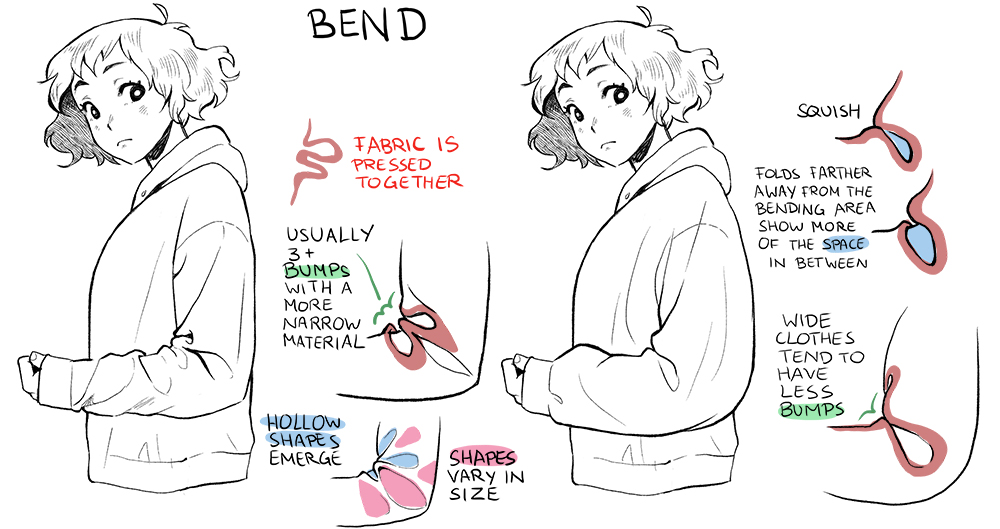
When aptitude the fabric is pressed together and creates hollow shapes that vary in size.
There are more bumps with more narrow textile. Broad material tends to squish together with fewer folds.
The material adapts to the forms' movement. Folds usually follow the twist. It can be very helpful to emphasize the movements.
Note that the lighter and thinner fabric in the example to a higher place shows fewer folds since the arm is even so generally resting.
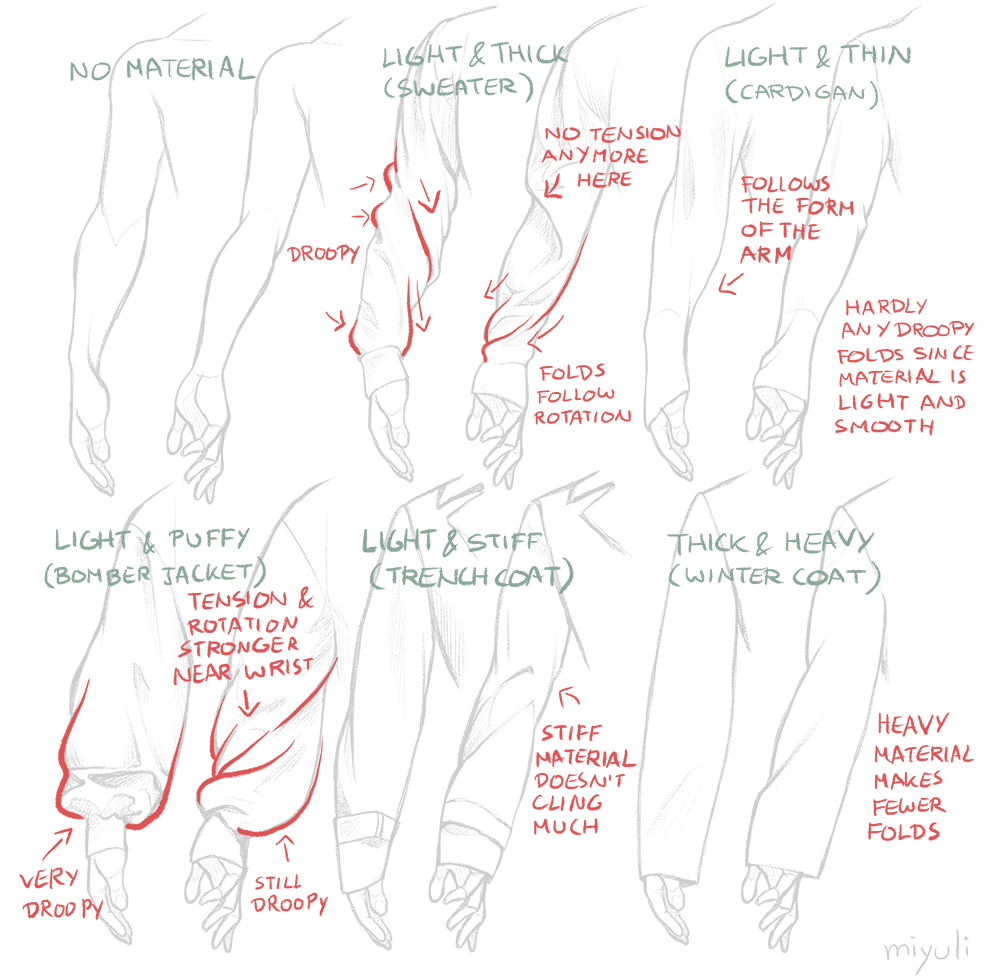
The artillery heavily dictate the pulling areas where folds emerge.
Opening a jacket absorbs some of the pulling when the arms are raised.
Pants
The fabric of the pants is supported at the waistline.
Pants start wider and narrow down to the knees because they adjust to the bone structure of the legs.
With narrow pants, creases are usually visible at the knees.
When cartoon bumps in the fabric it's good to show their origin and book. It does make a visual departure when you tin can imagine the folds in a 3-dimensional space.
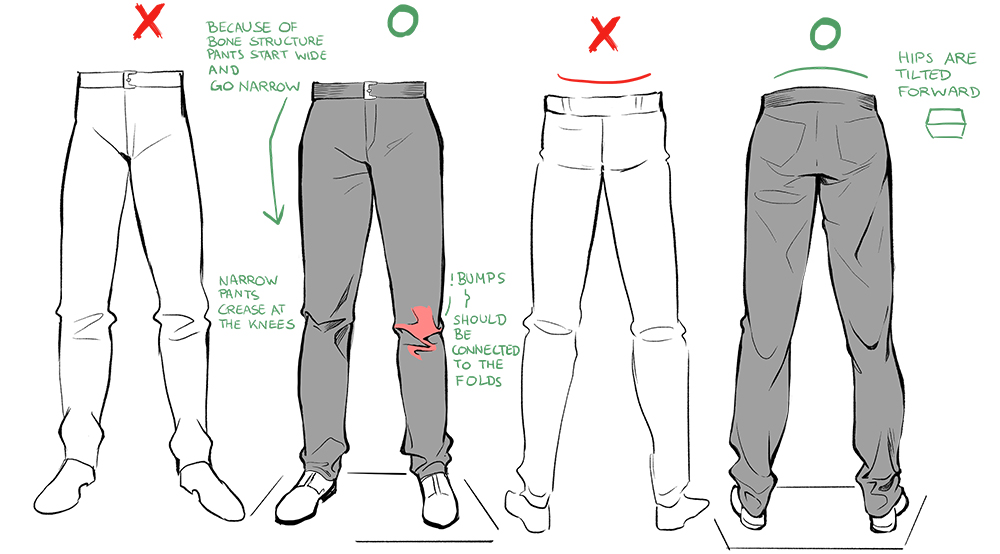
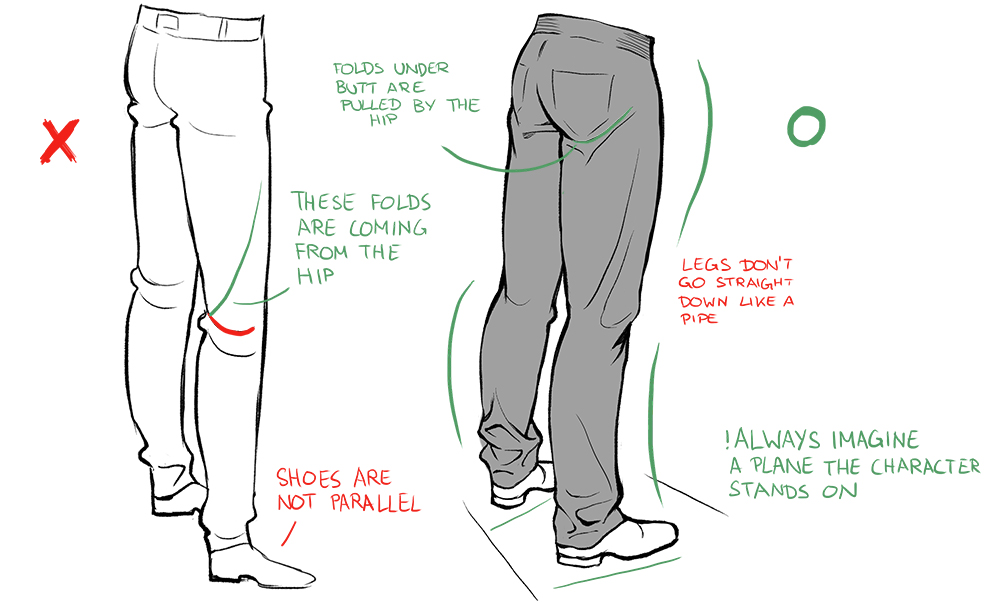
From the back, y'all tin see folds forming under the barrel region that get up to the hip.
The folds at the knees are too visibly pulled past the hips from the back view.
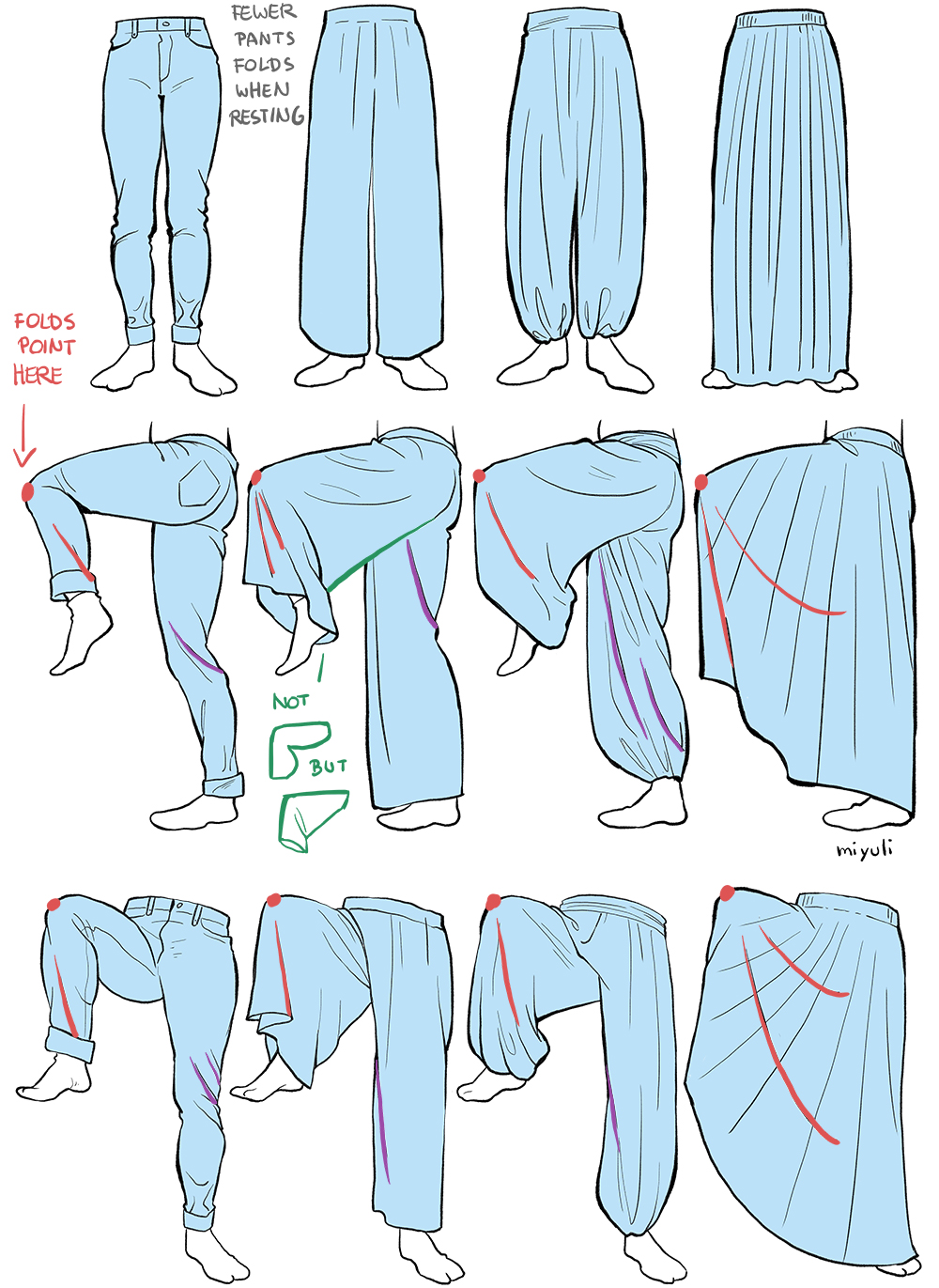
In general, when the body is just continuing and resting, at that place are less dynamic folds.
When a leg is lifted, the knee becomes the strongest pulling point.
Be careful of the forms that the pant legs create when the leg moves.
Shadows and Highlights
Depending on the thickness of the cloth the shadows effectually the folds appear slightly unlike.
When shading folds, it's good to use a combination of soft and hard edges.
When painting pay attention to how smooth and soft the material is. The smoother it is, the more than it reflects light and has a brighter highlight. Rougher and more than textured materials diffuse light.
The darkest surface area is normally where forms are pressed together and an occlusion shadow appears. This as well applies to very deep creases where light does not reach.
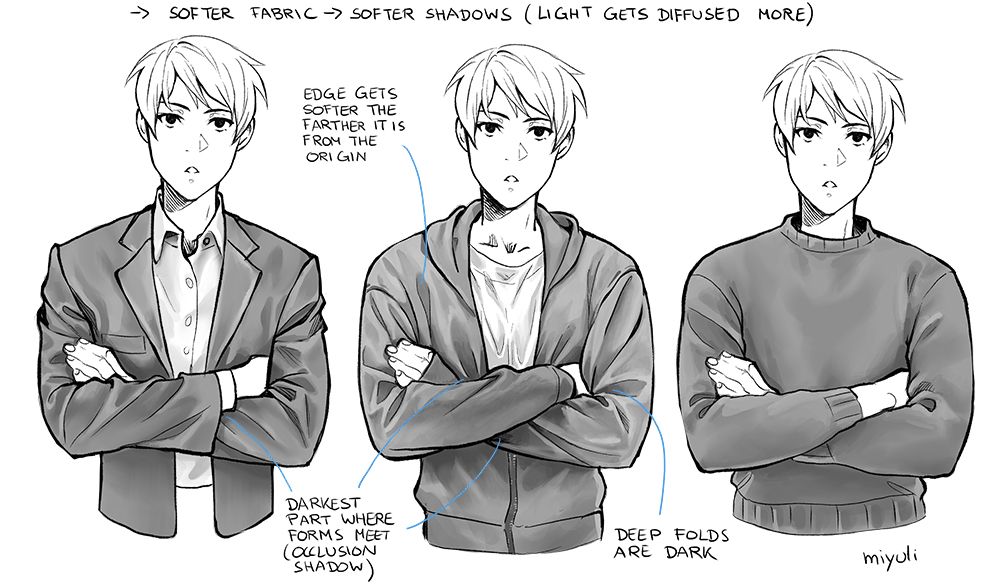
Here are some quick tips that I noticed while shading materials.
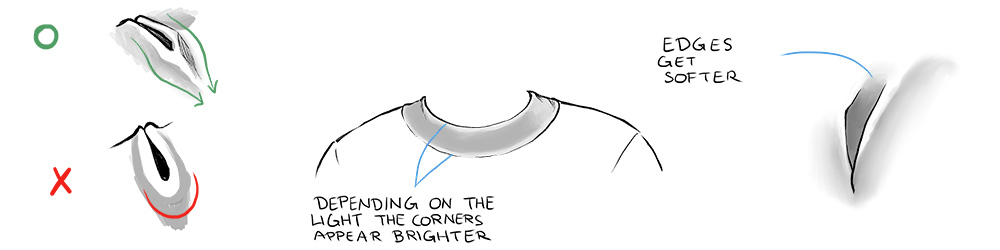
The shading, similar the width of the folds, varies between soft edges or highlights depending on the fabric, so it's good to familiarise yourself with as many materials equally possible to build upwardly a rich visual library.
0 Response to "Fashion Female Drawing Under a Blanket"
Post a Comment